Eid is not just a celebration; it is an emotion filled with light, gratitude, and spiritual beauty. In recent years, digital creativity has transformed how people express festive moments, and AI-generated imagery has become one of the most powerful tools for visual storytelling. Among the most trending styles today is the Ultra Realistic Eid Mubarak Cinematic Portrait AI Prompt, which blends cultural elegance with cinematic photography aesthetics to produce visually stunning results.
This style is widely used for Instagram posts, digital greeting cards, and creative portfolios because it captures the essence of Eid with dramatic lighting, realistic textures, and emotional depth. Whether you are a designer, content creator, or just someone who loves experimenting with AI art, understanding this style can elevate your creative output significantly.
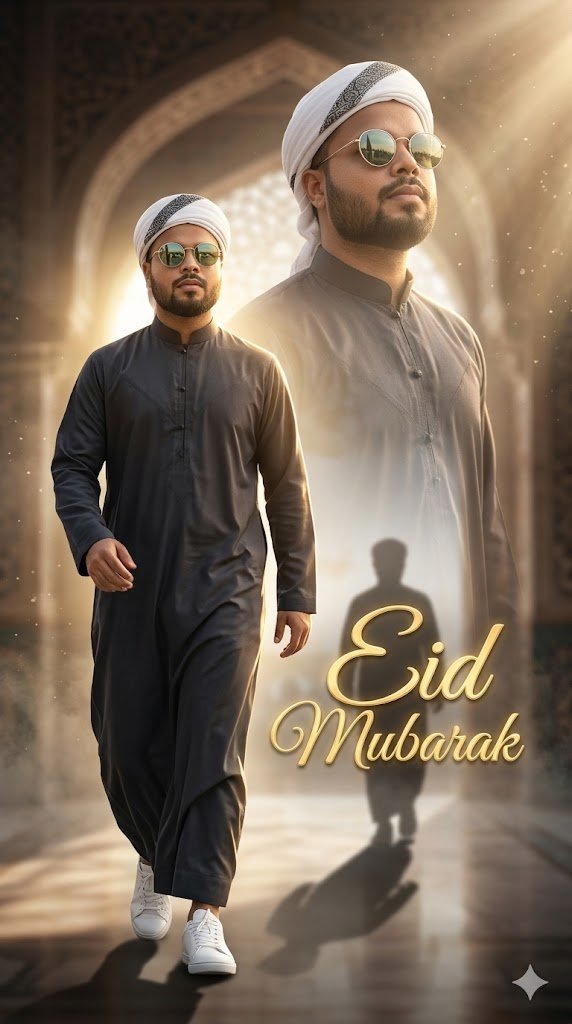
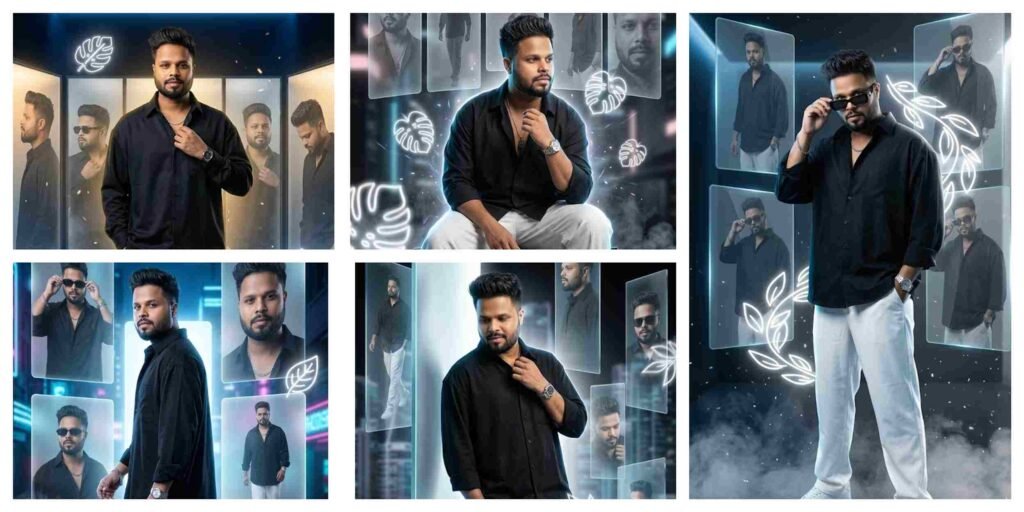
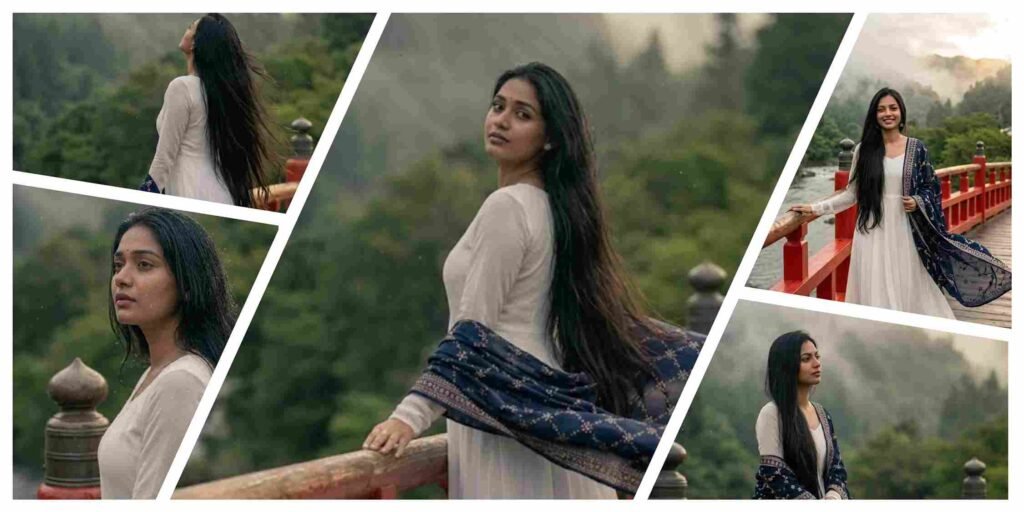
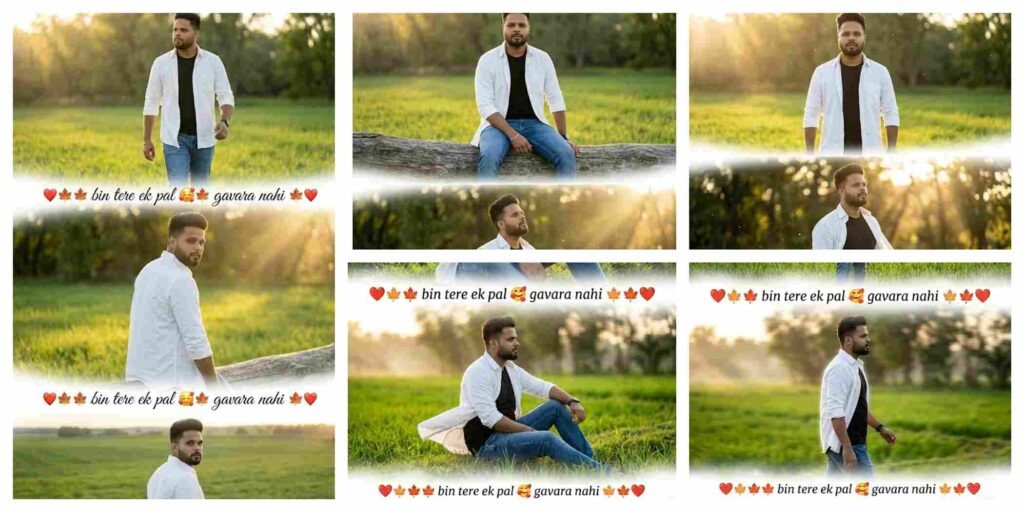
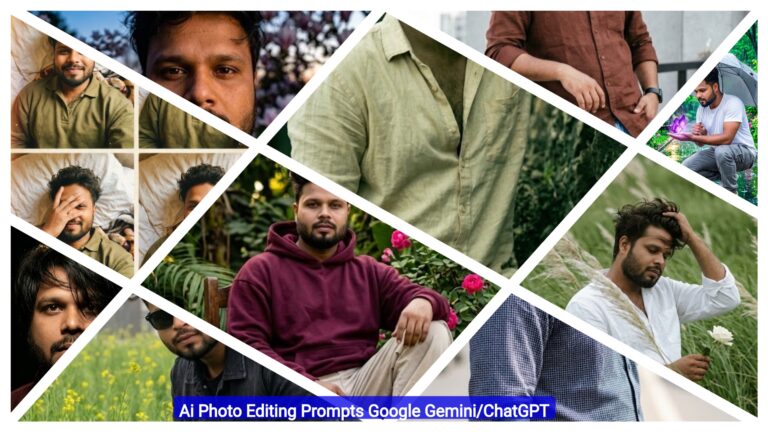
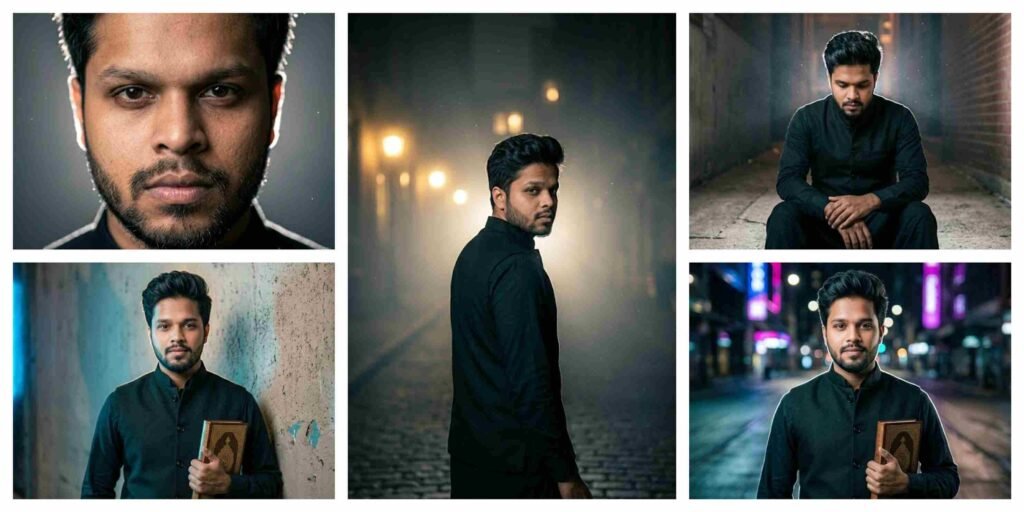
Ultra realistic 8K cinematic portrait, 9:16 vertical ratio, DSLR quality, shallow depth of field, golden hour sunlight. A stylized Eid Mubarak composition featuring a young man (use reference face, 100% identity preserved). He appears in three layered instances inside the frame. The main subject on the left foreground is captured from a low-angle tracking shot, walking toward the camera with confident motion. He wears a dark white Arabic-style jubbah, white imamah pagri with subtle black design, round sunglasses, and clean white sneakers. His face shows light stubble and sharp greenish eye tone detail. Behind him, a larger semi-transparent version of himself stands in soft focus, slightly turned toward the sky. A third faint silhouette appears in the far background walking in the same direction. Golden hour sun rays flare through cinematic dust particles and light fog, creating dramatic rim lighting and long shadows. Ultra detailed skin texture, Instagram viral aesthetic, soft bokeh background, mosque-inspired environment.
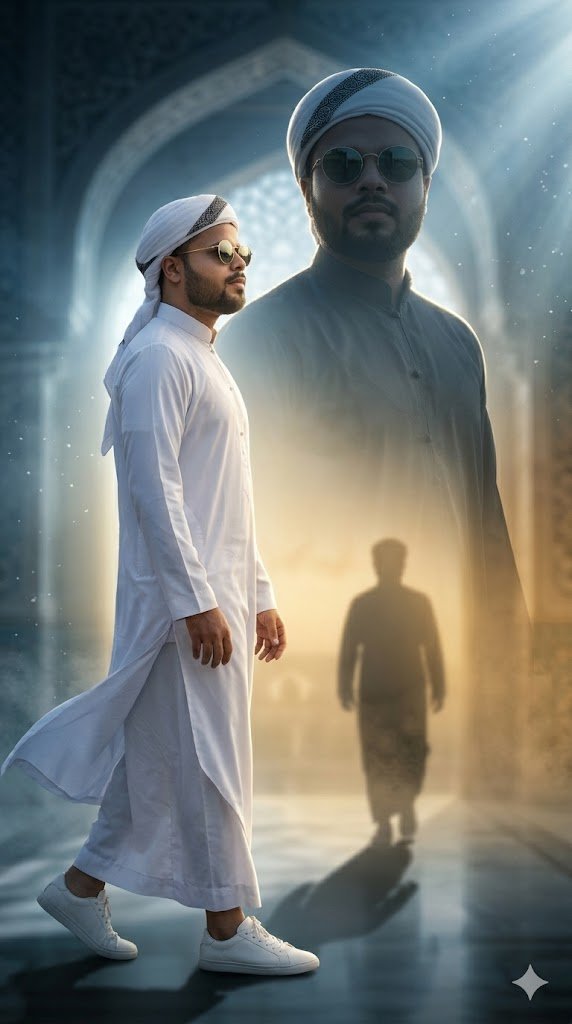
Ultra-realistic 8K DSLR cinematic portrait, 9:16, dramatic side lighting, shallow focus, hyper-detailed skin, cinematic fog. The composition shows the same young man in three instances, but with a side-profile dominant framing. The main subject on the left is captured in a slow walking side angle, face turned slightly toward the horizon, wind gently lifting his jubbah fabric. Same outfit: white Arabic jubbah, imamah pagri with black detailing, sunglasses, white sneakers. Second instance behind him is larger, semi-backlit silhouette, facing forward with calm expression. Third instance is faint and blurred, walking in opposite direction creating a time-split effect. Lighting is cooler golden-blue mix, sun partially hidden, strong rim light outlining face and shoulders. Cinematic dust particles floating in air, soft fog layers, shallow depth of field, premium fashion editorial feel.Ultra-realistic 8K DSLR cinematic portrait, 9:16 vertical, shallow depth of field, golden sunset lighting, atmospheric fog. The main subject is shown in a three-instance layered timeline composition. Foreground instance (left side) is captured in an over-the-shoulder angle, walking forward while slightly turning his head toward camera. Outfit remains identical: white Arabic jubbah, imamah pagri black design, sunglasses, white sneakers. Behind him, a larger version of himself is fully visible from the front, standing still with a calm Eid greeting expression. Third instance is a blurred walking silhouette disappearing into warm fog. The background features soft mosque arches, glowing sunset beams, cinematic lens flare, and dust particles floating in depth layers. Strong storytelling mood, premium fashion editorial look.
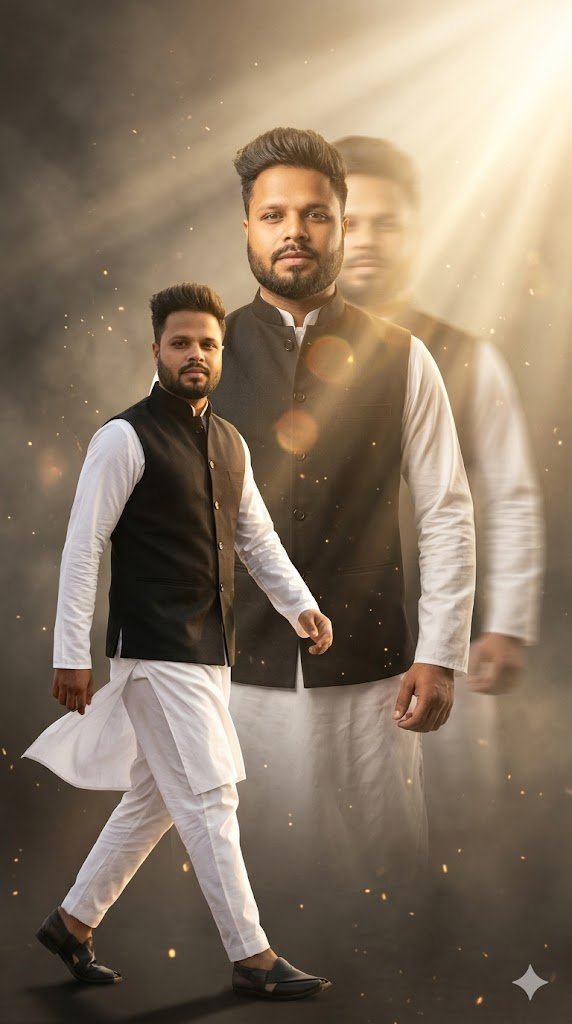
Ultra cinematic 8K hyper-real portrait, 9:16 vertical, DSLR motion capture style, golden hour, dramatic lighting. The composition shows a dynamic multi-exposure effect with three clear instances of the same man. The main subject is on the left foreground in a walking motion freeze-frame, captured mid-step with flowing jubbah movement. Same outfit preserved in all instances. Behind him, a larger central version stands still facing forward, acting as the emotional anchor of the frame. The third instance is a faint motion trail version slightly offset, creating a sense of time movement. Lighting is intensely cinematic with golden sun rays cutting through fog, strong lens flare streaks, dust particles glowing in air, and ultra shallow depth of field. Instagram viral fashion poster aesthetic, high contrast shadows, hyper-detailed skin and fabric realism.
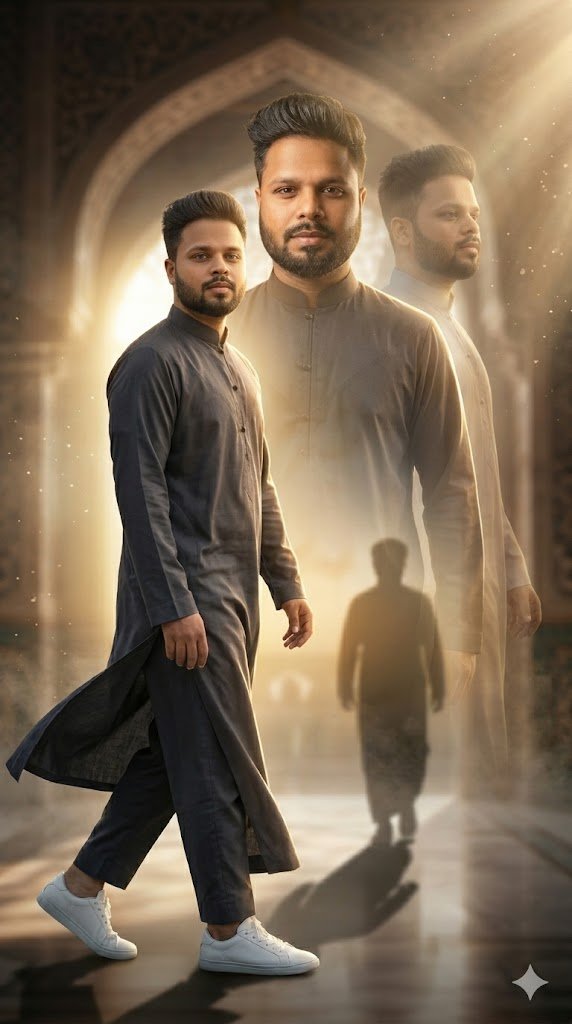
Ultra cinematic 8K hyper-real portrait, 9:16 vertical, DSLR motion capture style, golden hour, dramatic lighting. The composition shows a dynamic multi-exposure effect with three clear instances of the same man. The main subject is on the left foreground in a walking motion freeze-frame, captured mid-step with flowing jubbah movement. Same outfit preserved in all instances. Behind him, a larger central version stands still facing forward, acting as the emotional anchor of the frame. The third instance is a faint motion trail version slightly offset, creating a sense of time movement. Lighting is intensely cinematic with golden sun rays cutting through fog, strong lens flare streaks, dust particles glowing in air, and ultra shallow depth of field. Instagram viral fashion poster aesthetic, high contrast shadows, hyper-detailed skin and fabric realism.
The Rise of Cinematic AI Portraits in Festive Photography
Over the last few years, AI image generation has evolved from simple illustrations to hyper-realistic portraits that closely resemble professional DSLR photography. Cinematic AI portraits, especially for festivals like Eid, have become extremely popular on social media platforms.
The reason behind this trend is simple: people want visually rich content that feels authentic yet artistic. A cinematic Eid portrait typically includes warm lighting, soft background blur (bokeh), emotional facial expressions, and traditional attire enhanced with modern styling.
Unlike traditional photography, AI allows creators to experiment freely with lighting conditions, environments, and moods without needing expensive equipment or studio setups.
Understanding the Essence of an Ultra Realistic Eid Portrait
An ultra realistic Eid portrait is not just about visual appeal; it is about storytelling. Every detail in the image contributes to a larger narrative of celebration, peace, and spirituality.
Key elements often found in this style include:
The subject wearing traditional Islamic attire such as a jubba, kurta, or thobe, often in white, beige, or earthy tones that symbolize purity and peace. The background usually features a mosque, lantern-lit streets, or soft golden skies during sunrise or sunset.
Lighting plays a crucial role. Golden hour lighting is preferred because it adds warmth and depth to the face, making the portrait feel emotionally powerful. Shadows are soft yet dramatic, enhancing facial structure and clothing texture.
The overall composition is cinematic, often inspired by DSLR photography techniques, with shallow depth of field and carefully balanced highlights and shadows.
Cinematic Lighting: The Heart of Eid Portrait Aesthetics
Lighting is the most important factor in achieving a cinematic look. Without proper lighting, even the most detailed portrait can feel flat or unrealistic.
Golden hour lighting is the most widely used technique in Eid-themed AI portraits. This lighting occurs shortly after sunrise or before sunset, producing a soft orange glow that naturally enhances skin tones and fabric textures.
Another popular approach is volumetric lighting, where light rays pass through fog or dust particles in the environment. This creates a dreamy and emotional atmosphere that fits perfectly with Eid celebrations.
Some creators also use backlighting techniques, where the subject is illuminated from behind, creating a glowing halo effect that symbolizes spirituality and divine peace.
Styling and Composition for Maximum Visual Impact
Styling in Eid cinematic portraits is deeply connected to cultural authenticity. Clothing plays a significant role in establishing the mood of the image.
Men are often styled in traditional outfits like crisp white jubbas, embroidered kurtas, or flowing Arabic thobes. Accessories are minimal but meaningful, sometimes including prayer caps or subtle scarves.
The composition is usually centered around emotional expression. A gentle smile, upward gaze, or calm reflective expression adds depth to the portrait. These subtle details help convey the spiritual essence of Eid.
Background composition is equally important. A blurred mosque dome, festive lights, or open sky with soft clouds helps create a balanced visual hierarchy without distracting from the subject.
The Role of AI in Modern Eid Photography
AI has revolutionized creative photography by making professional-quality visuals accessible to everyone. Tools like generative image models allow users to create cinematic portraits simply by describing the scene in text.
What makes AI-generated Eid portraits special is the level of control it offers. You can adjust lighting, mood, camera angle, facial expressions, and even weather conditions with precision. This flexibility enables creators to produce unique visuals that would otherwise require expensive production setups.
Moreover, AI allows for experimentation. You can create multiple versions of the same portrait with different moods—morning serenity, sunset glow, night festival lights—all from a single concept.
Why Ultra Realistic Eid Portraits Go Viral on Social Media
Social media platforms like Instagram, Facebook, and Pinterest thrive on visually appealing content. Ultra realistic Eid portraits naturally stand out due to their cinematic quality and emotional resonance.
There are several reasons why this style performs well:
The visuals are highly detailed, making them eye-catching even on small mobile screens. The warm and festive color palette aligns perfectly with Eid celebrations, creating an emotional connection with viewers.
Additionally, these portraits often feel personal and relatable, even when AI-generated. They capture human expressions, cultural identity, and spiritual themes in a way that resonates with a wide audience.
Creators also benefit from the shareable nature of these images. A well-designed Eid portrait can quickly go viral, especially when paired with meaningful captions and hashtags.
Tips for Creating High-Quality Eid Cinematic Portraits
To achieve professional-level results, attention to detail is essential. Focus on maintaining consistency in lighting and color tones throughout the image. Avoid overly harsh contrasts that can make the portrait look artificial.
Facial realism is another key factor. The subject’s skin texture, eye reflections, and subtle expressions should appear natural and not overly smooth or plastic-like.
Background simplicity is also important. A clutter-free environment ensures that the subject remains the focal point of the image. Soft blur effects help achieve this balance.
Finally, post-processing adjustments such as color grading and contrast enhancement can significantly improve the final output, giving it a polished cinematic finish.
The Future of AI-Generated Festive Portraits
As AI technology continues to evolve, the future of festive portrait creation looks incredibly promising. We can expect even more realistic textures, improved facial accuracy, and better integration of cultural aesthetics.
In the near future, users may be able to generate fully animated Eid portraits or interactive greeting visuals that respond to user interaction. This will completely transform how digital celebrations are experienced.
For creators, designers, and marketers, this opens up endless opportunities to innovate and engage audiences in new ways.
Conclusion
The Ultra Realistic Eid Mubarak Cinematic Portrait AI style represents a perfect blend of tradition and technology. It allows creators to capture the emotional beauty of Eid in a visually stunning and modern way. With the right understanding of lighting, composition, and storytelling, anyone can create impactful cinematic portraits that resonate deeply with audiences.